Green Privilege


Generators drone

            exhausting blue smoke

            like stationary lawnmower engines—

can’t be without the life-breath of electrons,

now can we?

No.

We pull together, shelter those in need

            fight the good fight, now and for the future

                        at the polls and in our homes

            and rail against the P the G and E,

                        the lavish lives of management and board

and all the others held to blame.

But this outage outrage is on us all.

Whatever needed to be done was not:

            Paradise is lost—

and so now may we all be

            as flames race the wind and blacken the vine

                        we reap red cinders in the storm

            and warm salt water

                        soon will lap our lawns.


But save the frozen chicken, save the milk!

            (The booze we drink at any temperature.)

Save the electrons in the batteries

            so we can turn them into photons

                        in our lanterns and devices;

save the date

            (the coming of the deadly winds is on

                        my weather app);

save the trees, the roots, the stock, the seeds;

save the planet and the plant

            where my mother used to work;

save the workplace

            the occupations and the meanings

                        of our lives: SAVE THE ARTS.

Save the country, as Laura Nyro sang,

            save our children’s    children’s    children’s   future

save the waters of the salmon, and the eel, and smelt,

save yourself and everyone you love,

            but don’t save the money—

                        spend it all to save the rest.


I am sure we all do what we can.

To save anything, first we must survive.

We are all heroes in our own struggle.

We save our memories and use them

to fuel the fires of our best intentions

for who will save us now from blistered skin

if not ourselves?


But some do more than others.

Support them. Cherish them.

Honor them in life and death.

            See them

                        on the front lines with their hoses,

                                    dozers on the smoking slope—

                        the many so-called volunteers from prison,

                                    dollar an hour, two for the day

                                    not really choice, just more modern slavery—

                        the trauma teams, the cops, the EMT’s

                        dispatchers, techs, and line crews

                        the press who make the people’s interest theirs

                        the victim/heroes helping as they bleed

                        the endless twenty-four-hour shifts

                                                no start of day, no end of night

for us

and know them for the saviors that they are.

Their bodies

            through fatigue and pain

            are focused on their jobs

their hearts

            on mothers, fathers, lovers, friends

            and strangers

                        for whom they may at any moment

                                    give their lives.

In the midst of fire, water, ashes, blood and tears

their lonely despair cannot be acknowledged

or they — and we — are lost.

The definition of brave.


So, what to do

            when in the morning light of day returns?

Fire up my five-horse Briggs and Stratton

            don my ear protection,

                        and mow

a lawn
            too moist, too lush, too thick, too green

                                      to burn.


Elegy to My Grandmother’s Husband

(In Memory of Neal Gingery)


Since I’ve heard your voice and seen you, Grandpa,

                                                                        most of my life has passed

and though forever out of reach,

                        a long-ball gone beyond the fence,

I feel your presence still;

            with me

                        like the cryptic scent of neatsfoot-oiled leather

                                            on my glove-hand,

                        infield dirt beneath the nails of my right,

                                            grass-stained knees,

                                                                        the easy feel of a clean line-drive.


It’s true I was afraid when you were drunk on Early Times

            shot straight in the morning,

            highball glass on your TV tray at night,

            with me in Grandma’s lap as darkness grew

                              but that’s only shadow

                                              at the edge of light

            that is my memory of you.


I remember how you gave my catcher’s mitt to me.

            You bought it new, but I could feel and smell

                                                                        you’d rubbed it up, worked it in.

            I see now when you held it in your arms like a baby

                        just before you placed it on my hand,

            taught me the signs,

                        how to make a pitcher trust his pitch,

                                    catch a curve, marshal the infield,

            showed me the heart and head of the catcher’s job

                                                                        and how you loved the game.

I never saw you

catch    throw    field    or hit

but I feel now as if that mitt was old                and yours,

and when I

            nail a runner stealing second base

            snag a wild pitch to save a run

            or block the plate and make the winning out—

when I do the work I need to do between the lines

                        on this last road trip to end the season—

                                                that I’m finishing up the game for you.


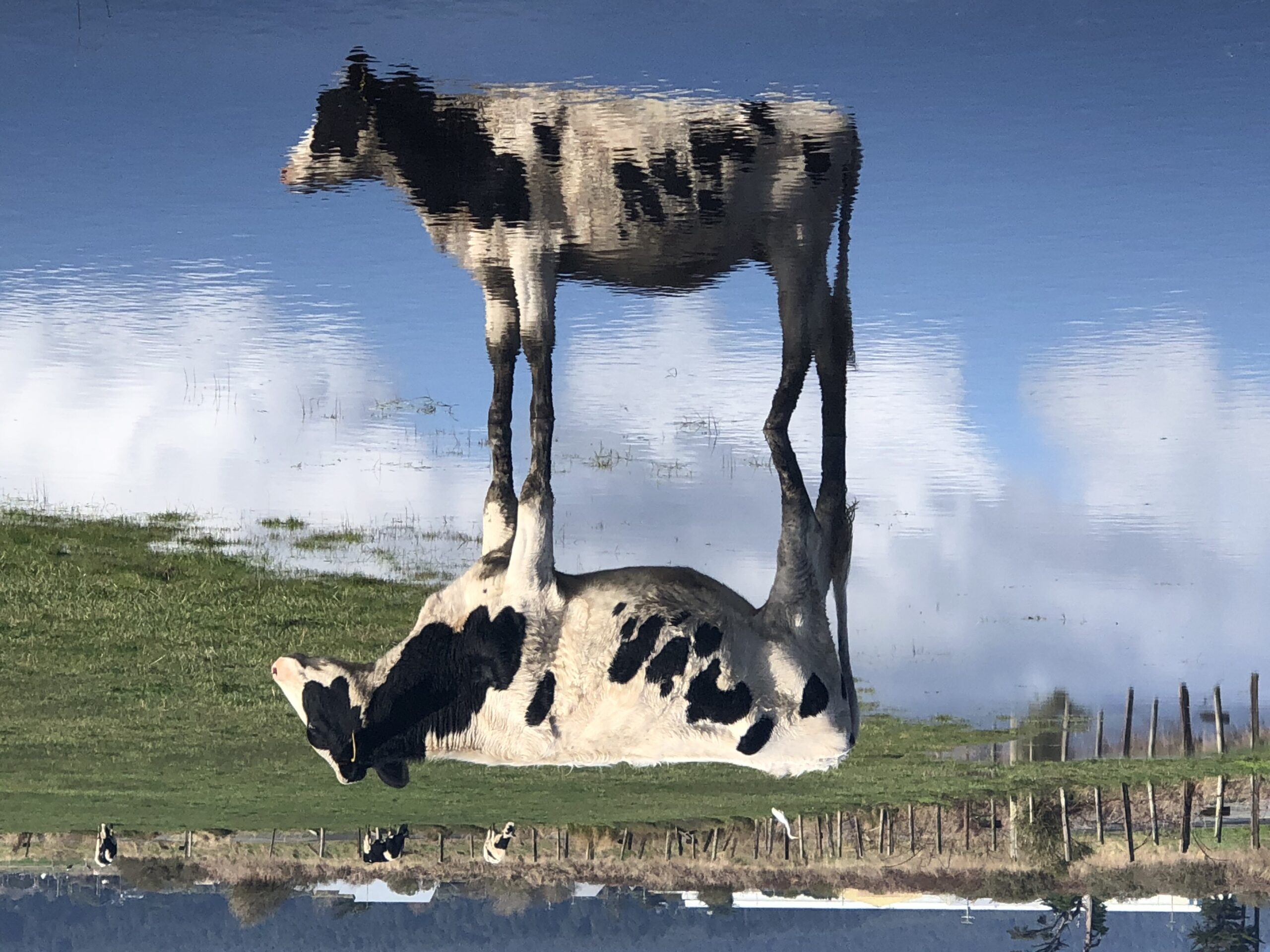
Bovinity


In the muddy pasture

at the end of the lane

black cows graze.

Tufts of unexpected fur

brushstroke their backs

dried manure cakes their sides

fresh-wet slurry

down sturdy shanks

their modest beef-cow udders

lurk turgid

in the dark between.

Their occupation of ripping

grass and vetch with a tearing crunch

of looking up

to chew     to gaze     to drop

flat splatter-pies

barely interrupted by my presence;

the nearest of the dozens

raise their heads

and twist their massive necks

sloughing falls

of cracked crust-scales

to level onyx eyes

assessing me

still and steady

a steamy breath before

without the faintest

trace of thought

they swing their shining snouts

back down to earth.

Between the Lines


Baseball is poetry:

every game a poem

each inning, mirrored stanzas;


at-bats and pitches, verbs;

players and positions, nouns ;

balls and strikes, vowels and consonants;


crack of bat on ball and snap of mitt,

assonanze and onomatopea;

fielding, alliteration;


snap-throws, similes;

running the bases, rhyme and rhythm;

glove-leather redolence, sonority;


the double play, enjambment;

home, a metaphor;

a homerun means we go home happy;


life, a pass-time, passing time until next spring,

a poem, life between the lines extending

past the dark foul pole to infinity.


Facing the Bar

—Dedicated to the Steven Bell, Dr. Javalin, and everyone who ever lifted weights in the SRC at Humboldt State


Fingers wrapping knurled rings, the gnarled

paddings of my palms press the steely bar

the bar impressing skin, impressing me;

cold, chrome-hard steel, soon hot beneath my hands,

impassive, graven, obdurate, immune

to all intent, a last redoubt of fear.


Leaning in, I eye the steel horizon

its shaft of shine and grime divides the world—

above, below, before, beyond—a line

to hold and give direction to my course

extending to the rack, the weights beyond

a darkling blur. Above the bar my face


is not the face that others ever see;

a backward mirror-image self of grim

resistance, the bravado of a glare,

its back to the reflected world, the gym—

meaningless machines moving with the groan

of human sweat. The heart inside the heart


of my desire, between the skin and bones

the muscles wait, their and my existence

in the balance of the fray, the struggle

to abide, persevere—and yet we dread

those tiny deaths within the very thing

we fear, and hesitate, negotiate.


In charge again, I put the rebel flesh

within to rout, its own blind memory

betraying it, my need to feel the push

and pull of life birthing every second  

every heartbeat-flood of heat, urgently

moves my body, me, to its position


beneath the weight. Hands and arms restrain me

like a bar-fighter’s second, my shoulders  

to extremis, face to face my other

self, I touch my bar-kiss callus to the

rod and lock us onto one another;

it to me, eyes locked, each upon itself.


In preparation for the act, I suck

a grimaced breath, and pause only several

seconds, but, as time will have it, in this

moment an avalanche of thoughts insist

like a mother’s call, a teacher’s set of

admonitions, an order from a cop:


first, don’t think about these things that you must

think of, then forget that they have crossed your

mind, but do them, every one, even those

that you’ve forgotten, for in truth you must

forget them all to do them right, and trust

your mindless meat to know the moves to make;


swallow your complaints, don’t rationalize;

don’t think what else you could be doing or

what could be that you know will not; do not

let the pity-party start, or the road

to death will widen in the looming mist

and darkness will embrace you like a friend.


So, I rise against the weight, straighten my

angled legs, take it full upon my back

and feel the wave extending through my spine

to heels, toes, depleted pads on soles:

gravity, this force, this element of

nature, eternal, everywhere at once


the unseen truth of its larger presence

like a colossal animal, glimpsed in

shadowy dreams, with crushing strength, yet staid,

silent, steady, sheltering us from its

immensity, holding all at distance

a beautiful beast, the power of stars.


Seemingly without a mark or thought of

now the move begins as if my body

is alive without my mind, and pumping

blood from atria through aorta to

narrow veinal cataracts, I swell to

fullest girth, gut beneath the leather belt,


throbbing. Limbs and tense core still for a beat,

I release, resisting yet employing

gravity, as the slow descent ensues.

I observe myself—how the I of my

body reacts to what the I of my

mind is causing it to go through—I check


for pain—not psychic pain, the nauseous

whine of self-pity, nor the petty pain

of opportunity cost, the time lost

not doing that mythical something else,

nor even the pain of strain, of the dumb

unwillingness of selfish cells to stoke


the fires, my heart to pump, my diaphragm

to force air into soft, compliant lungs—

but the sharp ones, the deal-breakers, pain

that screams aloud that this is my last rep.

But that alarming signal does not come.

I continue the squat to the bottom—


the bounce, glutes and hammies, sacrum, coccyx,

spine coiled—then the push. The explosion

I hoped to spark ignites and bones reverse

direction as my largest muscles work

as one to elevate the weight again:

a chain of flesh against the tidal force.


It’s now as if the deed’s already done.

Nothing left but the press, the rise, the hoist.

I monitor my feet: no heels, no toes

now, just mid-foot balance, steady pressure

telling of the focus of my motion

to the top—not foregone, but past the fear.


When the rote and rigid movement upward

ends in metal-crashing as I rack it

I think about the future and the past—

how things unfinished can now be renewed,

how voices yet unheard and places yet

unseen may now be just within my reach.


I may pick wild berries in the fall—

not with the bleeding avarice of youth

when the metaphors were all erotic

and the seeds were something more than gritty

bits between my teeth—but slow and easy

down the lane, sharing, you and I, the fruits

of all the loves we nurtured in our time.
 

Elegy to My Grandmother’s Husband

— In memory of Neal Gingery


Since I’ve heard your voice and seen you, Grandpa,

                                                                        most of my life has passed

and though forever out of reach,

                        a long-ball gone beyond the fence,

I feel your presence still;

            with me

            like the cryptic scent of neatsfoot-oiled leather

on my glove-hand,

infield dirt beneath the nails of my right

grass-stained knees,

                                                                        the easy feel of a clean line-drive.


It’s true I was afraid when you were drunk on Early Times,

            shot straight in the morning,

                        highball glass on your TV tray at night

                                    with me in Grandma’s lap as darkness grew

but that’s only shadow

                                    at the edge of light

that is my memory of you.


I remember how you gave my catcher’s mitt to me.

            You bought it new, but I could feel and smell

                                                                        you’d rubbed it up, worked it in.

            I see now when you held it in your arms like a baby

                        just before you placed it on my hand,

taught me the signs,

            how to make a pitcher trust his pitch,

            catch a curve, marshal the infield,

showed me the heart and head of the catcher’s job

                                                                        and how you loved the game.

I never saw you

catch      throw      field      or hit

but I feel now as if that mitt was old                and yours,

and when I

            nail a runner stealing second base

            snag a wild pitch to save a run

            or block the plate and make the winning out—

when I do the work I need to do between the lines

                        on this last road trip to end the season—

                                                that I’m finishing up the game for you.

Dear Brother,


Those words have so many connotations,

denotations, demarcations. Brother.

Dear in human sense, yet I am more

brotherly with others than with you.


Reasons, unreasons, causes, casualties

are and have been many since you were ten,

now uncle to children you have never

met. Unreasonable, but with reasons.


My wondering where you are is tinged with fear.

I know that you are better now because

our sisters keep you closer and inform

me of your progress, such as it has been.


I hope you’re not on the street, or if so

that you are in your minivan. I hope

another woman has taken you in,

but fear for her, whoever she may be.


We share the same step-grandfather—grandma

Anna Mae’s second husband. He always

had a soft spot in his heart for you. Odd,

I see you in his picture on my wall,


and wonder why you look so like a man

you are not related to directly,

yet have always been so estranged from those

whose very eyes, voice, blood and bones you share.

Teacher Dreams Again


Teacher-dreams resume as I plan to sub.

Schoolhouse Rock with veggies:

students staging Okra-homa,

biology with broccoli.

In the audience I rip

through a Playbill teacher’s text

to match dramatis personae with class-lists,

look for scenes and lessons to direct,

but the room’s too dark to read.

Action builds,

the song-and-dance an improv jumble,

while serious critics, real educators from the NEA,

tisk, frown, and shake their heads in front row desks

looking for me to stop the madness

as if I were in charge. Reviews appear

as cartoon thought-bubbles flown on wires:

This is not miosis and mitosis!

We will not countenance such tripe!

This travesty will close at lunchtime/intermission!

But the show goes on anon and on and on

as wave on wave of sparkling adolescents

shuffle across the well-waxed classroom floor.

Cardboard carrots and tomatoes dip and swing,

wide-open mouths sing through stagey smiles,

innocent, and pure, out of tune and out of time,

fresh new teeth resplendent in the footlights,

backed and framed by cheesy farm-scene

cut-outs drooping from the white-board chalk-tray.

At least this dream is not on Zoom.

Pre-Surfacing


I know what happened before I was born

from biology books and sex ed films.

Helical assortments of random

genetic essence

from the man known as

Charles Wesley Bickford

Wes, Dad

encounters same

from the woman

answering to the name

Mary Francis Summers

then Fewell      then Bickford      then Bergman

       Mary Francis, Mom:


hers

ensconced in a planet

of a cell

an ovum large enough

if well-lit

to be visible to naked eyes;

of her but unknown to her

no longer her but hers

within the darkness of her body

        an egg

      unfertilized but fertile

         primed to explode

           its haploid fuses

                waiting

for a match

to weld whole again within

the inner skin the

twisted ladder and begin

the doubling and redoubling

   of my life;


his

an invisible yang

in a mindless swarm

of one-legged fairies dancing

head-down on a pin-point

each tightly wrapped

in sinews, tail-whip-slashing

knobby head oozing

enzymes to dissolve

her chemical defenses,

semi-clonal meiotic

brethren tadpole-piglets

pressing a colossal

spherical teat—

a speed-eating contest

one would win

while a billion others died.


So I began before my life

to be

whoever/whatever

wherever

the genetic cogwheels meshed:

hands from Dad

eyes from Mom

combination

hair       feet       face

from both

a life inside

that cannot be ascribed.

Cinco de Julio


Last night’s bright smoke

clings to hair and clothes.

Today breaks acrid,

rank with ripe decay;

burnt-out sulfur-shells,

damp in morning dew, flaccid,

toppled tubes of ash and paper

litter the lane, the battlefield fallen

line the gutter, burnt-out husks of war—

their odor mingles with fresh sea-fog

corrupting its iodine tang with smog.


On such a day as this

Adams and Jefferson were washed

and ready for embalming.

Our second and third presidents

died on Independence Day;

Adams’s son elected number six,

Tom and Sally’s children freed

on paper only.


The namesake of their death-month

was murdered by friends and colleagues

on the Ides of March—the last time

such a grand experiment in trust

as ours was killed—

that old one euthanized in full decline,

this youth may soon be throttled

in its prime.


And so, foreboding too is in the air

as I sweep charred paper bodies to the bin,

its odor thicker, nauseous,

edged with fear for those

who always do the suffering:

the children, their mothers and the peaceful.


Then, scooping up the last pan-full of ash

I see red script—the Chinese newspapers

from which the pyrotechnic tubes were made—

and I think of how Mao called us paper tigers,

and of parchment scrolls

hand inked by Master Tom,

of all our paper freedoms being lost,

and how, without struggle,

all are free

on paper only.